

Cart 0
Wireless Charger: The Future of Cable-Free Charging
Modern users prioritize convenience, as they use devices that support new charging technologies. Upgrade your charging game with a Wireless Charger that works without wires. Users can exploit this technology by just placing their device down on a charging surface instead of plugging in cables. People now charge devices differently, thanks to this innovation.
Appreciate the benefits of a Wireless Charger by understanding it’s working. Energy exchange between the charger and the device is done using electromagnetic induction. It removes the need for connectors and eliminates further wear and tear. This also enhances usability in domestic, business, and travel settings.
With increasing adoption of wireless charging by devices, there is a growing need for efficient solutions. This guide covers everything from basic to features, comparisons and so much more. It’s easy to understand how using wireless chargers makes our lives easier.
Importance of knowledge wireless charger
Wireless Charger is that one device that sends energy through the air, not cable. Electromagnetic fields transfer power from the charger pad to the device or the battery. Portable electronics include smartphones, airpods and other items that employ this technology.
Wireless charging is important because it is simple and hassle-free. When there are no cables, there is less risk of damaging the connector. It makes the interface more user-friendly and cleaner. Users can simply place their devices on the charging surface to recharge.
| Feature | Wireless Charger | Wired Charger |
| Convenience | High convenience | Moderate convenience |
| Charging Speed | Moderate to high | High speed |
| Durability | No cable wear | Cable wear over time |
| Ease of Use | Simple placement | Requires connection |
The technology and key features of wireless charger
Wireless charger has more advanced features that enhance performance and usability. Users can use the features to choose the right product.
Wireless battery charging
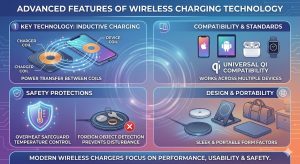
Inductive charging utilized by wireless chargers. The charger has a coil, and the device also has a coil. The battery is charged because energy transfers between coils.
Compatibility and Standards
The majority of wireless chargers conform to standardized norms. This guarantees it will work on different devices. Multiple gadgets can be charged by the same charger.
Overheat safeguard
Temperature control is a feature of wireless chargers. This stops charging from overheating.
Detection of Objects from Abroad
This function helps keep track of items that can disturb the charge process. It guarantees secure functioning by preventing power transmission at moments of necessity.
Here are a few essential features.
- The convenience of charging without cables.
- Works on multiple devices like iPhone, watch etc.
- Safety protections included.
- Stylish and portable shape.
Design and Portability
Today’s chargers are built to be sleek and portable. They can fit easily on a desk or by your bedside.
Energy conservation
Wireless charger efficiency becoming increasingly better. They minimize energy loss while delivering reliable performance.
Wireless Charger vs Traditional Charging Techniques
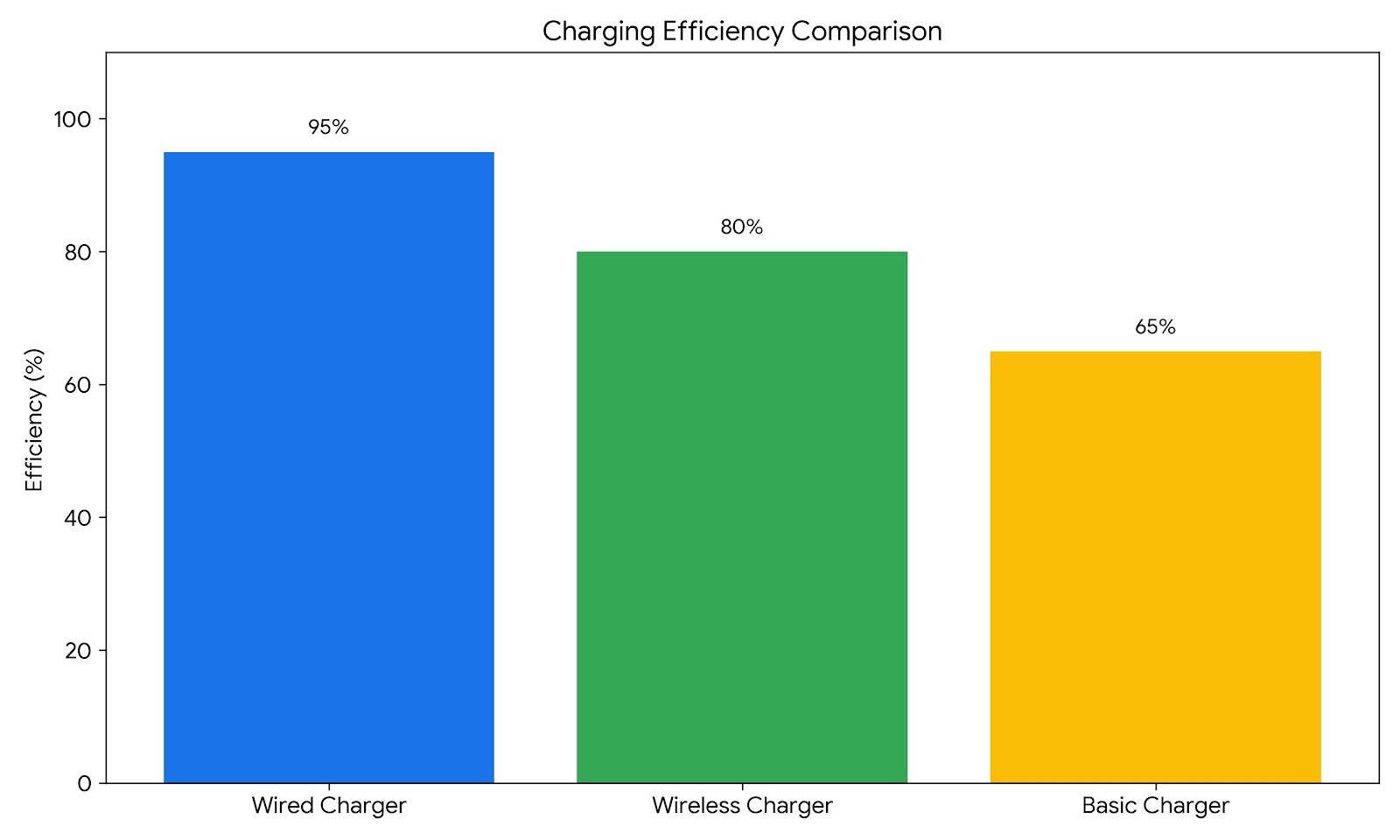
- In terms of performance, wired chargers are the best with 95% of power being transferred.
- As you see, a wireless charger is very handy but it is only 80% effective as energy is lost during induction.
- Old Basic charging systems only offer 65% efficiency, while our state-of-the-art wireless designs deliver much better.
Final thoughts
A wireless charger is truly a new era of charging. It is a convenient and cable free way to charge. Easy to use and modern, it improves you charging experience every day.
By learning about its functions and advantages, users can make better choices. Although wired chargers might have higher efficiency, wireless chargers are a lot more convenient. In this way, they hold great value in modernity.
Right charger from Shenzhen Sunray Technology Limited will help users improve the charging process for a smoother operation. Wireless charging is an integral part of technology that is going to be used extensively.
Continue researching
Questions readers usually ask next
Explore Wireless Charger Guide for Fast and Cable-Free Power with key features, benefits, and tips for convenient and efficient charging.
Planning points worth checking early
These notes are here to make the next comparison or sourcing step more concrete.
What this clarifies
Use the article to narrow the next technical or sourcing question instead of staying broad.
What to compare
Check the closest related product family, requirement, or compliance route next.
When to ask
Move into contact or quotation once the issue is specific enough to affect feasibility or timing.
Keep comparing options
These references help visitors move into the most relevant next comparison or conversation.
01
Wireless Charger Manufacturer
See how wireless charger manufacturer supports the next product, sourcing, or factory-planning decision.
02
Wireless Charger
Compare product options, narrow the right format, and move into the next selection step with clearer context.
03
Request a Quote
Share the project scope, target markets, and volume expectations to move into a practical quotation discussion.
04
Contact Us
Reach the team directly for technical questions, sampling requests, and sourcing follow-up.
Questions readers often ask next
Each answer is written to help the next decision feel more concrete.
Why do readers usually look for this topic before sourcing decisions?
Because Wireless Charger usually affects specification choices, supplier conversations, or the way risks are compared before a program moves into sampling or volume planning.
What detail should be clarified next after reading about Wireless Charger?
The next useful step is usually to define the requirement that will affect feasibility most, such as output level, destination market, safety path, connector format, or packaging direction.
Is this topic more useful for engineering, sourcing, or product teams?
It is often useful across all three because the strongest launch decisions usually come from aligning technical fit, commercial requirements, and timeline expectations instead of treating them separately.
When should someone move from reading to requesting a quote or technical review?
That usually makes sense once the key questions are focused enough to influence feasibility, approval timing, sampling scope, or pricing, even if every detail is not finalized yet.
Need help turning this reading into a product decision?
Share the application, target output, and destination markets if the article has narrowed the next discussion enough to review practical options.