

Cart 0
Customized Power Supply for Devices: The Key to Reliable and Efficient Performance
When it comes to powering devices, one size does not fit all. Customized power supply for devices offers tailored solutions that ensure optimal performance, energy efficiency, and safety. Whether you’re in the electronics, medical, or industrial sectors, the right power supply is critical to the operation of your equipment. Custom power supplies are designed to meet the unique needs of specific devices, taking into account factors such as voltage, current, and environmental conditions. In this article, we’ll explore the importance of customized power supplies, the benefits they offer, and how to choose the best solution for your device.
What is a Customized Power Supply and Why is it Important?
A customized power supply for devices is specifically designed to meet the unique requirements of a particular device or application. Unlike standard power supplies, which provide a generic voltage and current output, customized solutions are tailored to provide the exact power specifications needed for the device to function optimally.
These power supplies are essential in industries where reliability, efficiency, and safety are paramount. For example, medical equipment requires power supplies that can deliver precise voltage and ensure the safety of sensitive patients. Similarly, industrial machinery often operates in harsh environments, requiring power supplies that can withstand extreme temperatures and vibrations.
Key Benefits of Customized Power Supplies:
- Tailored Performance: Designed to meet the exact voltage, current, and power specifications of the device.
- Improved Efficiency: Custom power supplies can help minimize energy waste, improving overall device performance.
- Enhanced Safety: Customized solutions are built to meet specific safety standards, protecting both the device and the user.
- Reliability in Harsh Environments: Custom power supplies are engineered to perform in extreme conditions, such as high temperatures or exposure to moisture.
Choosing a customized power supply for devices ensures that the power needs of the equipment are met, which in turn enhances the overall performance and longevity of the device.
Key Features of a Customized Power Supply for Devices
Customized power supplies offer a range of features that can be tailored to meet the specific needs of a device. When selecting a power supply, several key aspects should be considered to ensure the best fit for your device.
1. Voltage and Current Specifications
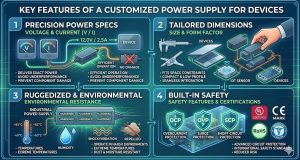
One of the primary considerations when designing a customized power supply is the voltage and current output. Different devices require different levels of voltage and current to operate efficiently. A power supply that is too weak may cause the device to underperform, while one that is too strong can damage the internal components. A customized power supply ensures that the device receives the exact amount of power it needs.
2. Size and Form Factor
The size and form factor of the power supply are also crucial considerations. Devices with limited space require compact power supplies, while others may need larger units for additional features. Custom power supplies can be designed in various sizes to fit the space constraints of the device, ensuring that they integrate seamlessly into the product.
3. Environmental Conditions
Customized power supplies can be designed to operate in specific environmental conditions. For instance, industrial applications often require power supplies that can withstand temperature extremes, humidity, and vibrations. Similarly, power supplies used in outdoor environments may need to be weatherproof or resistant to dust and moisture.
4. Safety Features and Certifications
Safety is a top priority for any power supply. Customized power supplies are often designed with specific safety features, such as overcurrent protection, surge protection, and short-circuit protection. Additionally, many custom power supplies are built to meet international safety standards, such as UL certification and CE marking, which ensure that the product has passed rigorous safety tests.
Comparing Customized Power Supplies vs. Standard Power Supplies
To understand the advantages of a customized power supply for devices, it’s helpful to compare them to standard, off-the-shelf power supplies. Below is a table comparing the key differences between the two:
Feature Customized Power Supply Standard Power Supply
Voltage & Current Tailored to specific requirements Fixed output, may not meet device needs
Form Factor Designed to fit device space constraints Generic sizes, may not fit all devices
Environmental Suitability Designed for specific conditions (heat, moisture, etc.) May not withstand extreme conditions
Safety Features Includes tailored safety mechanisms (overcurrent, surge protection) Basic safety features
Energy Efficiency Optimized for device performance and efficiency May not be as energy-efficient
| Feature | Customized Power Supply | Standard Power Supply |
| Energy Efficiency | Higher efficiency with optimized output | Moderate efficiency with general output |
| Power Loss | Reduced power loss | Higher relative power loss |
| Performance Optimization | Designed for specific device requirements | Built for broad compatibility |
| Heat Generation | Lower due to efficient conversion | Higher due to energy waste |
| Long-Term Cost Savings | Better operational savings over time | May result in higher energy costs |
| Application Suitability | Ideal for specialized or high-performance systems | Suitable for general-purpose devices |
How to Choose the Right Customized Power Supply for Your Devices
When selecting a customized power supply for devices, it’s essential to consider several factors to ensure that you choose the best solution for your needs. Here’s a step-by-step guide on how to make the right choice:
1. Understand Your Device’s Power Requirements
Before choosing a power supply, it’s crucial to fully understand your device’s power needs. Determine the required voltage, current, and power ratings to ensure that the power supply can deliver the necessary energy without underperforming or damaging your device.
2. Consider the Environmental Conditions
Consider the operating environment of your device. If your device will be exposed to high temperatures, moisture, or physical stress, ensure that the power supply is designed to withstand these conditions. Work with a supplier who can provide power supplies rated for these extreme environments.
3. Choose a Reputable Supplier
The supplier you choose should have experience in designing and manufacturing custom power supplies. Look for a supplier who offers high-quality, UL-certified products and can provide ongoing support and consultation to ensure the power supply meets your device’s needs.
4. Evaluate Cost vs. Value
While customized power supplies may have a higher upfront cost compared to standard units, they offer better performance, safety, and efficiency. Consider the long-term benefits of a custom solution, such as reduced downtime, improved device longevity, and lower energy costs.
Conclusion
A customized power supply for devices is essential for ensuring that your equipment operates efficiently, safely, and reliably. With sunray ai tech, power solutions are precisely engineered to meet the exact requirements of your device, enhancing performance, reducing energy consumption, and extending overall lifespan. Custom power supplies from sunray ai tech are especially valuable in industries requiring precise specifications, such as electronics, healthcare, and industrial manufacturing, where reliability and accuracy are critical.
When selecting a customized power supply, it’s important to consider factors such as voltage and current specifications, environmental conditions, safety features, and the reputation of the supplier. With the right power supply, you can optimize your device’s performance and ensure a reliable, long-lasting solution for your power needs.