

Cart 0
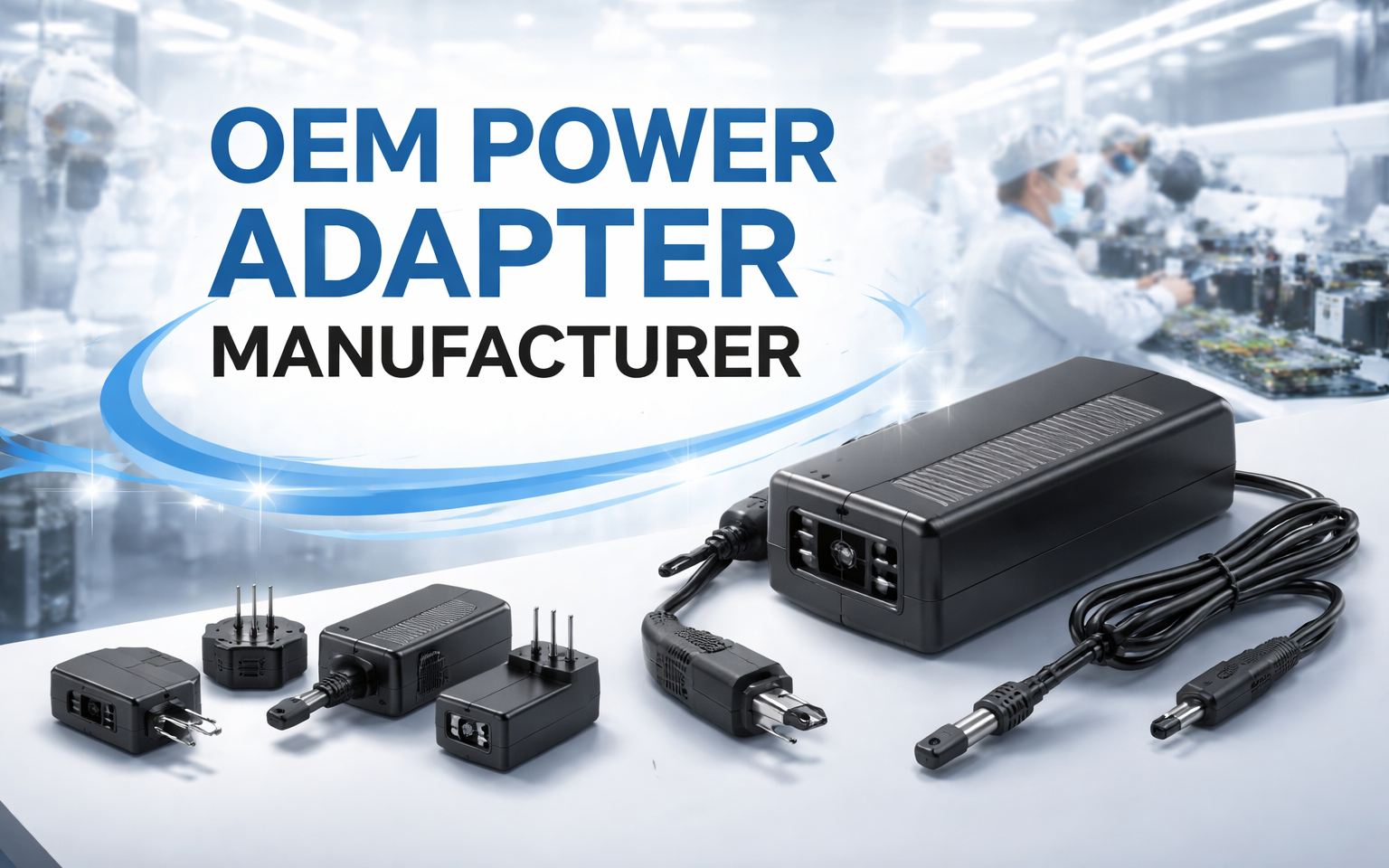
OEM Power Adapter Manufacturer: Ensuring Quality and Reliability
In this smart world where technology keeps changing, people always look to select the right OEM power adapter manufacturer. OEM adapters are components used in a variety of products, from laptops and smartphones to industrial electronics.
A reliable supplier of OEM power adapters offers consistent quality, follows regulations, and will customize one to fit your needs. This post discusses the role of OEM manufacturers, capabilities and tips for choosing a manufacturer that ensures both innovation and reliability. Through knowledge of key factors, companies can guarantee that products will achieve optimum performance and safety; that will not spoil.
OEM Power Adapters – Their Fundamentals and Importance
An OEM power adapter is designed for specific devices and has the voltage, current and safety requirements of device. Companies design these adapters to fit seamlessly with the particular electronics in an efficient way.
Importance of modern electronics
- OEM adapters offer protection against incorrect voltage or current damage.
- Safety norms: certified adapters comply with global safety standards.
- OEM adapters supply consistent power and keep your devices running optimally.
| Feature | OEM Adapter | Generic Adapter |
| Device Compatibility | High | Moderate |
| Safety Standards | Certified | Varies |
| Lifespan | Long | Shorter |
| Reliability | Consistent | Variable |
Choose OEM manufacturers that will protect OEM devices and users. Backup video discussing the same.
Manufacturing Capabilities and Quality Control: Detailed Aspects
A manufacturer of OEM power adapter known for their reliability offers.
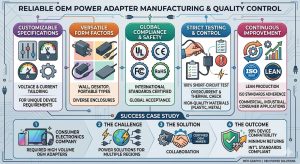
Tailor-made voltage and current specifications
There are many types like wall, desktop and portable adapters of different forms.
Quality Checking and Compliance
The global acceptance of the product is ensured by its compliance with UL, CE, FCC, and RoHS certification.
Testing: 100% product testing for short-circuits, overcurrents, and thermal incidents.
Quality of plastic and metal must be high
Manufacturers Continuously Improve By Following Lean Production and ISO Standards Standards
Manufacturers that create adapters for commercial, industrial, and consumer electronics need these capabilities, especially when developing efficient solutions like PD fast charger technology.
Study Case
- Consumer electronics company needed OEM adapters in high volume.
- Challenge: Power Solutions Required for Equipment across Multiple Regions
- Solution: Collaborated with a certified OEM maker.
- Outcome: Device Compatibility at 99%, Minimum Return & International Standards Compliance.
Supplier Type and Production Quality
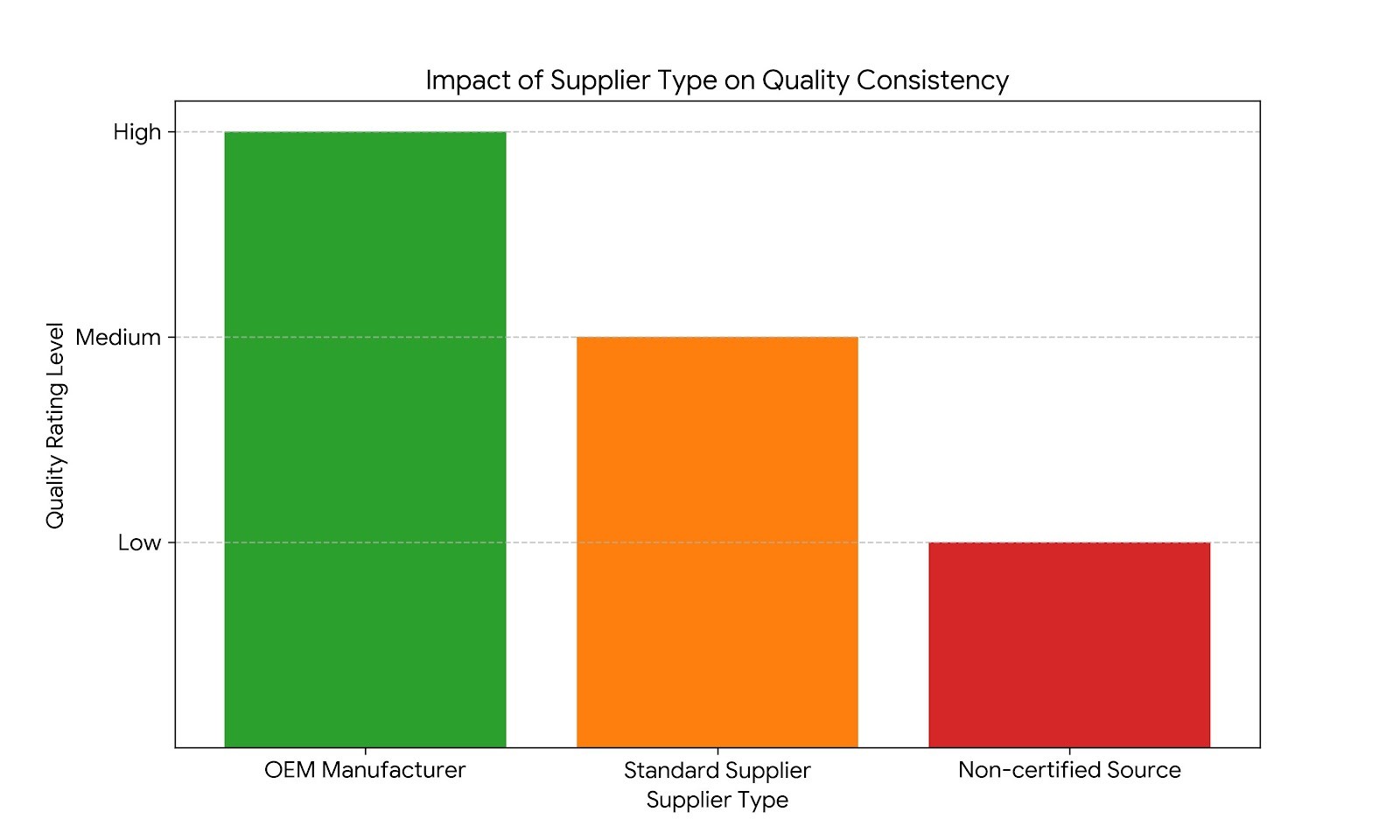
- OEM Manufacturers provide the highest quality rating; thus, components are manufactured to the original design specifications and manufacturing tolerances.
- Non-certified sources with low quality risks performance failure of the part leading to more faults, safety risk and higher operational cost due to maintenance and failure of parts.
- Performance stability refers to the mid-quality standard supplier that is suitable for non-critical applications but does not guarantee consistency like certified OEM
Choosing the Right OEM Manufacturer: Practical Tips
Process Follow-up
- The voltage, current, plug type and certification need to be defined.
- Check Certificates: UL, CE, FCC, RoHS, ISO compliance.
- Evaluate Production Capacity: Make sure goods can accommodate big orders.
- Quality Assurance Assessment: Testing Checks and Guarantees Review.
Other Thoughts
- Sturdy technical assistance as well as post-sales services.
- Familiarity with comparable electronics.
- Clear rates and shipping timelines.
- Capability to furnish design insights for enhancement.
By following these steps, companies will work with an OEM manufacturer that provides a reliable, safe and market-ready adapter.
Ending
It is very critical to choose the right OEM power adapter manufacturer to ensure device performance.
Manufacturers offering certified and customizable solutions, like Shenzhen Sunray Technology Limited, help improve product quality, expand markets, and reduce returns.
With a reputable OEM partner, devices can operate safely, efficiently and consistently; ultimately stimulating sustainable growth and customer satisfaction. Companies that implement these factors get competitive advantage and maintain credibility in the electronic market.
Continue researching
Questions readers usually ask next
Discover a leading OEM power adapter manufacturer delivering reliable, high-quality adapters for diverse applications and industries.
Planning points worth checking early
These notes are here to make the next comparison or sourcing step more concrete.
What this clarifies
Use the article to narrow the next technical or sourcing question instead of staying broad.
What to compare
Check the closest related product family, requirement, or compliance route next.
When to ask
Move into contact or quotation once the issue is specific enough to affect feasibility or timing.
Keep comparing options
These references help visitors move into the most relevant next comparison or conversation.
01
Power Adapter Manufacturer
See how power adapter manufacturer supports the next product, sourcing, or factory-planning decision.
02
Power Adapter
Compare product options, narrow the right format, and move into the next selection step with clearer context.
03
Request a Quote
Share the project scope, target markets, and volume expectations to move into a practical quotation discussion.
04
Contact Us
Reach the team directly for technical questions, sampling requests, and sourcing follow-up.
Questions readers often ask next
Each answer is written to help the next decision feel more concrete.
Why do readers usually look for this topic before sourcing decisions?
Because OEM Power Adapter Manufacturer usually affects specification choices, supplier conversations, or the way risks are compared before a program moves into sampling or volume planning.
What detail should be clarified next after reading about OEM Power Adapter Manufacturer?
The next useful step is usually to define the requirement that will affect feasibility most, such as output level, destination market, safety path, connector format, or packaging direction.
Is this topic more useful for engineering, sourcing, or product teams?
It is often useful across all three because the strongest launch decisions usually come from aligning technical fit, commercial requirements, and timeline expectations instead of treating them separately.
When should someone move from reading to requesting a quote or technical review?
That usually makes sense once the key questions are focused enough to influence feasibility, approval timing, sampling scope, or pricing, even if every detail is not finalized yet.
Need help turning this reading into a product decision?
Share the application, target output, and destination markets if the article has narrowed the next discussion enough to review practical options.